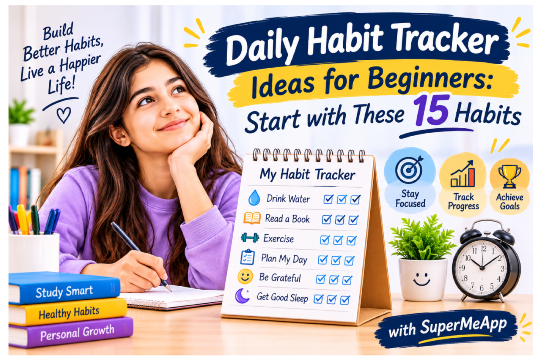
Building better habits does not require changing your entire lifestyle overnight. Sometimes, small daily actions can make a meaningful difference in how you feel, work, study, and manage your time.
However, maintaining consistency can be challenging. You might plan to exercise every morning, read more books, or spend less time on your phone, but remembering and following these intentions every day is not always easy.
A daily habit tracker can help you turn these intentions into manageable routines. By recording your daily activities and reviewing your progress, you can understand your behavior, recognize patterns, and gradually develop habits that support your personal goals.
If you are new to habit tracking, starting with a few simple habits is often more effective than trying to change everything at once.
In this guide, you will discover 15 daily habit tracker ideas for beginners, learn how to choose habits that fit your lifestyle, and explore practical ways to stay consistent.
What Is a Daily Habit Tracker?
A daily habit tracker is a tool that helps you record whether you completed specific activities or habits throughout the day.
You can use a notebook, spreadsheet, calendar, or habit tracker app to monitor your routine.
For example, your daily habit tracker might include:
- Drinking enough water
- Reading for 10 minutes
- Exercising
- Completing important tasks
- Practicing gratitude
- Going to bed on time
Whenever you complete a habit, you mark it as done. Over time, this creates a record of your consistency and progress.
A habit tracker is not about achieving perfection. It is about becoming more aware of your daily actions and making gradual improvements.
Why Should Beginners Use a Daily Habit Tracker?
Starting new habits can feel difficult when you do not have a clear system. Habit tracking provides a simple way to organize and monitor your activities.
Here are some benefits of using a daily habit tracker.
1. Build Consistent Daily Routines
Tracking habits helps you remember the activities you want to practice regularly.
Instead of relying entirely on motivation, you can follow a simple routine and check your progress each day.
2. Understand Your Daily Behavior
A habit tracker helps you identify which activities you complete consistently and which habits need more attention.
This information can help you make realistic adjustments to your schedule.
3. Stay Motivated Through Progress
Seeing completed habits can provide a sense of accomplishment.
Even small achievements, such as reading for five minutes or completing a short walk, can encourage you to continue.
4. Develop Better Time Management
Tracking activities such as planning your day, completing important tasks, and limiting distractions can help you become more aware of how you use your time.
5. Improve Your Personal Growth
Daily habits can support different areas of life, including physical well-being, learning, productivity, emotional awareness, and personal development.
15 Daily Habit Tracker Ideas for Beginners
If you are wondering which habits to track first, start with activities that are simple, realistic, and relevant to your goals.
Here are 15 useful daily habit tracker ideas.
1. Drink Water Regularly
Staying hydrated is an important part of everyday health.
You can track whether you drink water regularly throughout the day instead of waiting until you feel thirsty.
Choose an appropriate hydration goal based on your needs, activity, and health circumstances.
2. Read for 10 Minutes
Reading regularly can help you learn new information, explore ideas, and develop a reading routine.
You do not need to finish an entire chapter every day.
Start with 10 minutes of reading and gradually increase the time if it feels comfortable.
3. Exercise or Move Your Body
Regular physical activity supports physical health and general well-being.
Beginners can start with manageable activities such as walking, stretching, cycling, or simple home exercises.
Choose an activity that suits your fitness level and physical abilities.
4. Make Your Bed
Making your bed is a simple activity that can help establish a morning routine.
It takes very little time and provides an easy opportunity to begin your day with a completed task.
5. Plan Your Daily Tasks
Planning your responsibilities can make your day feel more organized.
Write down the tasks you need to complete and identify your most important priorities.
6. Practice Gratitude
Gratitude journaling involves recording things you appreciate in your life.
This can encourage reflection and help you pay attention to positive experiences.
7. Reduce Unnecessary Screen Time
Spending too much time on social media or entertainment can interfere with studying, working, sleeping, or other important activities.
Tracking screen time can help you become more aware of your digital habits.
8. Learn Something New
Learning regularly can help you develop knowledge and skills over time.
You can learn through books, educational videos, courses, quizzes, or practical activities.
9. Maintain a Sleep Routine
A consistent sleep schedule can support better rest and daily functioning.
Try to maintain regular bedtime and wake-up times that provide enough sleep for your age and needs.
10. Practice Mindfulness or Relaxation
Taking a few quiet minutes can help you pause and become more aware of your thoughts and surroundings.
Beginners can try breathing exercises, meditation, or a short relaxation activity.
11. Complete One Important Task
Instead of focusing only on the number of tasks you complete, identify one meaningful activity that deserves your attention.
This can help you avoid spending the entire day on less important responsibilities.
12. Keep Your Space Organized
A clean and organized workspace can make it easier to find important items and begin activities.
You do not need to clean your entire room every day.
13. Write in Your Daily Journal
Journaling gives you an opportunity to record experiences, thoughts, achievements, and challenges.
You can use a journal to reflect on your day and understand your personal goals.
14. Connect with Family or Friends
Maintaining meaningful relationships is an important part of everyday life.
Make time to communicate with people who matter to you.
15. Review Your Daily Progress
A daily review helps you understand what went well and what you want to improve.
It can also help you prepare for the next day.
How to Start a Daily Habit Tracker Without Feeling Overwhelmed
One of the most common mistakes beginners make is tracking too many habits immediately.
Instead, follow these practical steps.
Step 1: Choose Only Three Habits
Start with three activities that matter most to your lifestyle.
For example:
- Read for 10 minutes.
- Plan your daily tasks.
- Walk for 15 minutes.
Once these habits become easier to maintain, consider adding another activity.
Step 2: Make Each Habit Easy to Complete
A habit should have a realistic starting point.
If reading for 30 minutes feels difficult, begin with five minutes.
If exercising for an hour feels overwhelming, start with a short movement session.
Small actions are easier to fit into busy schedules.
Step 3: Connect Habits to Existing Activities
You can make habits easier to remember by connecting them to activities you already do.
Examples:
- After breakfast, review your daily tasks.
- Before studying, organize your workspace.
- Before sleeping, write a journal entry.
This creates a simple structure for your routine.
Step 4: Track Your Progress Every Day
Use your habit tracker to record completed activities.
Try to update it at a consistent time, such as in the evening.
The process should take only a few minutes.
Step 5: Review Your Habits Every Week
At the end of each week, ask yourself:
- Which habits did I complete most consistently?
- Which habits were difficult to maintain?
- Was my daily schedule realistic?
- Should I change or simplify any habit?
Use your answers to improve your routine instead of criticizing yourself for missed activities.
How to Choose the Best Daily Habit Tracker App
If you prefer digital tracking, a daily habit tracker app can make organizing and monitoring habits more convenient.
Before choosing an app, consider the following features.
Easy Habit Creation
Look for an application that allows you to create habits according to your personal goals.
Daily Progress Tracking
The app should make it easy to record completed habits and review your progress.
Reminders
Reminders can help you remember activities when your schedule becomes busy.
Routine Planning
Some applications allow you to organize habits alongside daily tasks and schedules.
Progress Visualization
Charts, calendars, or completion summaries can help you understand your consistency over time.
Simple User Experience
Choose an app that is easy to use and does not require excessive time to manage.
Track Your Daily Habits with SuperMeApp
If you want to organize your daily habits along with your tasks and routines, SuperMeApp offers features designed to support everyday productivity and personal growth.
With SuperMeApp, users can explore tools for:
- Habit Tracking: Monitor daily habits and work toward consistency.
- Task Management: Organize responsibilities and important activities.
- Productivity Calendar: Plan schedules and manage daily routines.
- Daily Journal: Record thoughts, experiences, and personal reflections.
- Notes: Keep important information organized.
- Learning Activities: Explore educational resources and quizzes.
- Progress Tracking: Review achievements and monitor personal development.
These features can help students, parents, and adults organize different aspects of their daily routines.
Explore the platform at SuperMeApp and discover tools for building better habits and managing everyday activities.
Common Daily Habit Tracking Mistakes Beginners Should Avoid
Habit tracking is most useful when it remains simple and realistic.
Avoid these common mistakes:
Tracking Too Many Habits
Starting with 15 habits at once may make your routine difficult to maintain.
Begin with a few important habits and add more gradually.
Setting Unrealistic Goals
A habit should fit your current schedule and abilities.
Choose small actions that you can realistically repeat.
Giving Up After Missing One Day
Missing a habit occasionally does not mean you have failed.
Focus on returning to your routine rather than trying to maintain a perfect streak.
Tracking Without Taking Action
A habit tracker is a tool, not the goal itself.
The real benefit comes from practicing the activities you record.
Comparing Your Progress with Others
Everyone has different responsibilities, schedules, and personal goals.
Track your own progress instead of comparing your routine with someone else's.
Conclusion
Building better habits does not require a complicated routine or a perfect schedule.
Start with a few meaningful activities, make them easy to complete, and record your progress consistently. Over time, your daily habit tracker can help you understand your routines and make gradual improvements.
Whether you want to read more, improve your time management, develop healthy routines, or become more organized, the best approach is to begin with small and realistic steps.
Choose three habits today, track them consistently, and work toward becoming a better version of yourself every day.
SuperMeApp can support your journey with habit tracking, task management, daily planning, journaling, and personal development tools.
SuperMeApp – Super App for Super You!