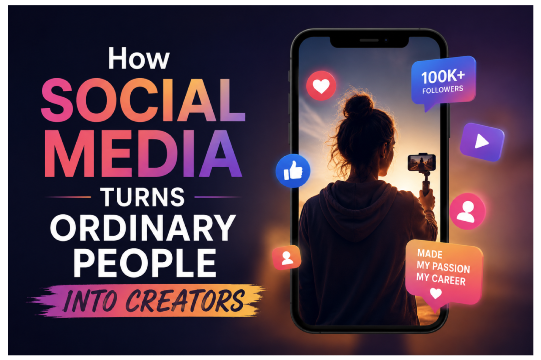
You no longer need a television studio to publish to an audience. A phone, an idea and a platform can turn a hobby, skill or point of view into content watched by thousands or millions.
You don't need a television station, production company or publishing deal to reach an audience anymore.
A phone can record a song, tutorial, experiment, joke, review or day-in-the-life video. Platforms can distribute that content to people far beyond the creator's friends.
This changes what it means to be a creator.
The starting point is often not “become famous.” It is “make something useful or interesting for a specific group of people.”
A cooking creator might solve a problem for beginners. A gamer might explain strategies. An artist might show their process. A student might document a science project.
Audience growth often comes from a combination of value, identity and consistency. People return when they know what kind of experience they will get.
But creator life has another side. Views are unpredictable. Platforms change their algorithms. Public feedback can be intense. And turning attention into sustainable income requires skills beyond making posts.
Try a mini creator experiment. Pick one thing you know or enjoy. Create three pieces of content around it for three different audiences.
Notice how the same idea changes depending on who you are helping.
The creator economy isn't simply about becoming an influencer.
It's about having the ability to turn knowledge, creativity or experience into something other people find valuable.