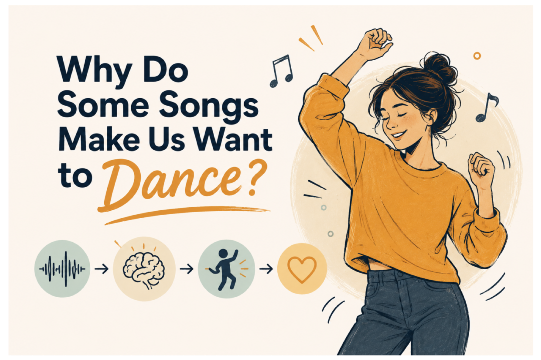
Ever heard a song and found your feet moving before you even thought about it? Your brain is very good at spotting patterns in sound.
Have you ever heard a beat and started tapping your foot without planning to? Music can make our bodies respond because the brain is excellent at noticing patterns.
A beat gives music a kind of predictable structure. Once your brain starts expecting the next beat, your body can begin matching the pattern by tapping, clapping, bouncing or dancing. This is called synchronising with rhythm.
Music can also connect with emotion and memory. A song you heard during a happy moment may bring that feeling back when you hear it again. Different rhythms can also make music feel calm, exciting, playful or dramatic.
Try a rhythm experiment. Clap a simple pattern: clap, clap, pause, clap. Ask a friend to copy it. Then make the pattern slightly more complicated. Can they keep up?
Now try moving to a song without copying a dance. Let your body choose how to respond to the beat.
The interesting thing is that dancing doesn't require knowing a particular set of steps. Your brain can detect timing and help your movements follow it.
Next time you hear a song that makes you want to move, notice what is pulling you in. Is it the beat? The melody? The lyrics? A memory?
Your feet may be telling you something your brain noticed first: a pattern worth following.