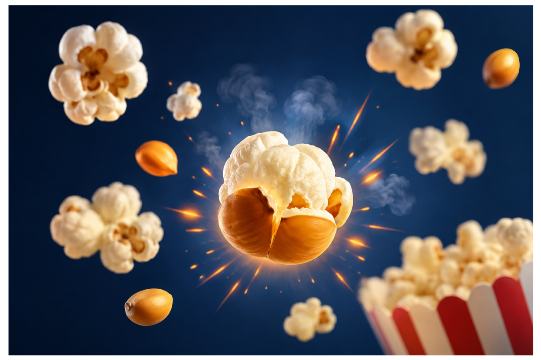
A popcorn kernel looks tiny and ordinary, but hidden inside it is a little science experiment waiting to happen. The secret is water.
A popcorn kernel is like a tiny sealed container. Inside it's hard shell is a small amount of water surrounded by starch.
When the kernel is heated, the water turns into steam. The pressure inside the kernel rises. Eventually, the outer shell cannot hold the pressure anymore. Pop! The kernel bursts open, and the starch expands into the fluffy shape we call popcorn.
That's why not every type of corn makes popcorn. Popcorn kernels have the right combination of moisture and structure to build up pressure when heated.
You can turn snack time into a science investigation. With an adult, compare popcorn kernels before and after popping. Look closely at the hard outside and the expanded inside.
Ask: What changed? Where did the fluffy part come from? Why are some kernels left unpopped?
You could even make a prediction before cooking: will a batch with more heat always produce more popcorn? Real experiments are about testing questions rather than guessing the 'right' answer.
Be careful around hot pans, steam and freshly popped popcorn.
The next time you hear that familiar popping sound, remember that you're hearing pressure and heat at work.
A snack can be a science lesson hiding in plain sight.