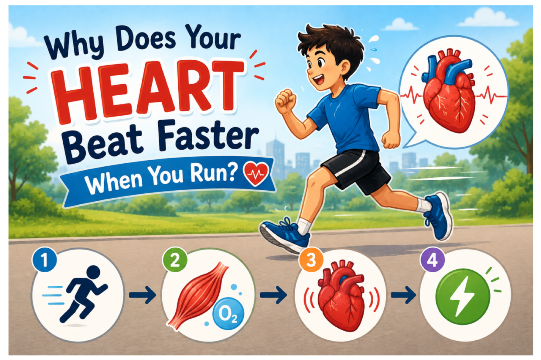
Your heart is like a delivery system for your body. When you run, your muscles suddenly need more oxygen and energy, so your heart works faster to help supply them.
Put two fingers gently on your wrist and notice your pulse. Now imagine running across a playground. Your heart would start beating faster. Why?
Your muscles need energy to move, and they need oxygen to help release that energy from food. When you exercise, your muscles work harder, so your body needs to deliver more oxygen and carry away waste products more quickly.
Your heart helps by pumping blood around your body. During exercise, it usually beats faster so more blood can reach working muscles.
You can safely observe this with an adult. Sit quietly for a few minutes and notice your pulse. Then do a short, comfortable activity such as walking briskly or doing a few gentle jumping movements. Stop, rest, and notice your pulse again. It should usually be faster after activity and gradually slow as you recover.
This is not a competition. Bodies are different, and you should stop if you feel unwell, dizzy or uncomfortable.
Your heart is working all day—even while you sleep. Exercise simply makes its job more noticeable.
The next time you run, don't think only about moving your legs. Think about the teamwork happening inside you: lungs bringing in oxygen, blood carrying it, and your heart helping deliver it where it is needed.
Your body is full of tiny systems working together.